
This is a nice timelapse of a small native garden.
Thank you, sa2albert, for the video.
These plants can be in your patch of ground. We can all have a meaningful contribution to the fabric of nature, and support the plants that support us, and the beauty of our world.
These are the plants we use in our designs. We pull from the natural conditions – wetland, woodland, savanna, prairie, etc. We plant the plants that will grow in the conditions you have on your proposed site.
They grow.
Pollinators come.
Birds come.
It is amazing.
We offer stewardship, too, as just like anything alive, it needs assistance, to establish and thrive.
This is beautiful work by 王孟達.
I absolutely love this kind of work.
It is a high art – a high expression of love, and inspiration!
Work is love made visible. And if you cannot work with joy but only with distaste, it is better that you should leave your work and sit at the gate of the temple, and take alms from them who work with joy.
Khalil Gibran
Artist, Poet, Writer
and another, so masterful!
This video has great perspective on our Midwest landscape, by Dr. Alan Branhagan, in Kansas.
Why plant natives? Just watch, and learn…..
How can you get more natives on your land? We can help. It is what we do. We love our natives!!!
I just found this series of videos… I am really enjoying this one in progress!
Great balance of information for the urban and suburban garden.
Great video:
How to restore a shore with native plants, trees, and shrubs is the focus of this video for contractors and landowners in Central Minnesota and the Upper Midwest. Crow Wing SWCD, University of Minnesota Extension, Minnesota DNR, and Thirty Lakes Watershed District partnered to produce five instructional videos about shoreline best management practices. Funding provided by the Minnesota Board of Water and Soil Resources, through the Clean Water, Land, and Legacy Amendment.”
Short and informative.
Keep in mind the area needs proper design, installation, and stewardship. Your project is best served by hiring a knowledgeable professional for this type of work!!!
They need habitat, and small sites do matter. Here is some pretty good information for homeowners, however, I prefer to specify natives only. If everyone put in a garden like this, it would really have great positive impact.
I do see butterflies in the urban gardens and industrial/corporate sites we have been working on.
FYI – a few more facts.
I was struck once again with the lack of flowers on my back-road drive to Peoria last week. We can do better. We can replant our native plants. We can co-exist, and we all will thrive when nature thrives.
http://chicago.suntimes.com/opinion/monarch-butterflies-need-help-in-illinois/
https://illinois.sierraclub.org/priorities/monarchbutterflies
https://monarchjointventure.org/
The best thing we can all do is plant more habitat – more natives!
I love this garden. Last I checked, the building was still for sale.
(I think I have upgraded my phone six times since this video…. Please forgive the limitations of 2012 smartphones!)
Do you want birds? Plant natives. Grow some caterpillars! Caterpillars feed birds, and are available much earlier in the year that seeds or berries. They are also critical foods for many creatures, including baby birds.

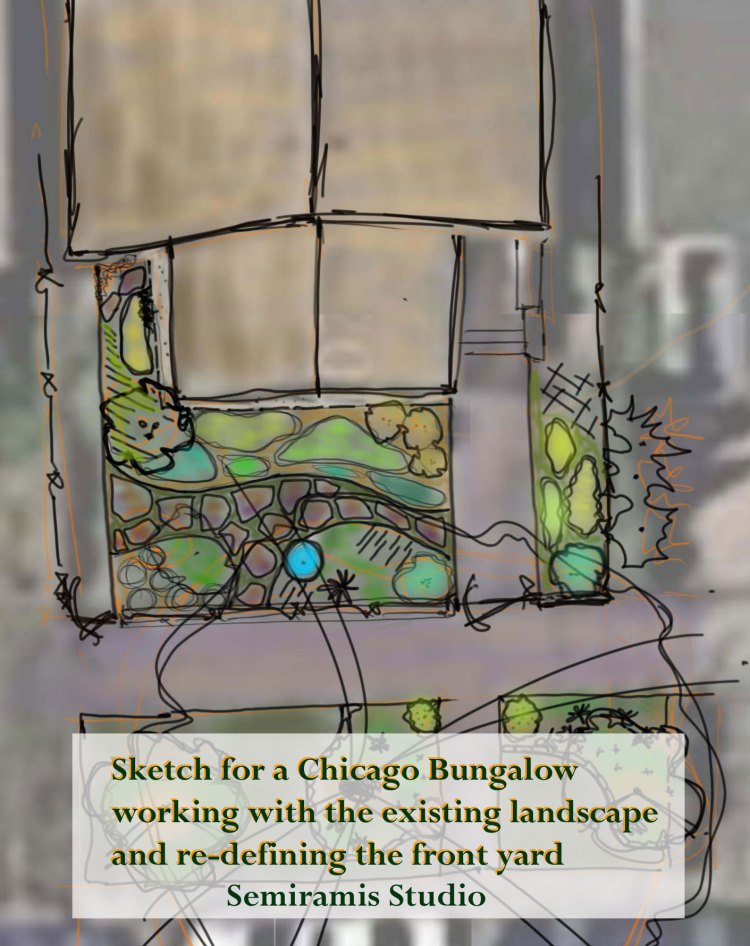
This Bungalow on Chicago’s Northwest Side has a front yard needing some redefining, replanting, and re-shaping. The Schematic Sketch included a design, recommendations for maintenance and reconstruction of a retaining wall, and an opinion of cost. The client can now budget the next steps, and can use the sketch and example pictures to communicate to future contractors.
Services included a site visit and meeting with client, the design, recommended materials and plants, and an opinion of construction cost.
The plants are all natives, and will attract many birds and butterflies to this urban garden – perfect for the client, who is a real nature lover!
Have a WordPress.com account? Log in now.

